Dry rot is a dangerous fungus that breaks down wood and can spread through brick, plaster and masonry. Find it early — watch for musty smells, cracked or brittle wood, white fungal growth or orange mushroom-like fruiting bodies. Removing the moisture source is always the first step. Prevention matters most: fix leaks quickly, improve airflow in damp areas, keep timber away from wet masonry, and check concealed spaces regularly.
Dry rot is a devastating wood-destroying fungus that can silently undermine the structural integrity of buildings. Whether you own a home, manage a commercial property or handle building maintenance, understanding how to identify dry rot early can save you thousands in repairs and prevent dangerous structural failures. This guide covers what it is, how to spot it, what causes it, how it spreads and how to stop it.
1. What is dry rot?
Dry rot is a form of fungal decay caused by Serpula lacrymans, which consumes the cellulose and hemicellulose in wood. As it does so, the timber becomes weak, brittle and structurally unsound. Unlike other types of rot, dry rot can spread beyond its original source, moving through plaster, masonry and other materials as it looks for new timber to infiltrate.
The phrase “dry rot” is a little deceptive. It requires damp conditions (above 20% moisture content) to flourish, even though it can grow in places with less moisture than wet rot. Once established, it spreads quickly and is frequently concealed beneath floors and behind walls.
2. Why early detection matters
If left untreated, dry rot can weaken the structure of your building, leading to costly repairs and a genuine safety risk. Early detection makes treatment far simpler and cheaper, and helps you preserve property value, avoid structural failure, reduce health risks from spores, and lower treatment costs.
3. The life cycle of dry rot
- Spores are always present in the air but need moisture to activate.
- When spores land on damp timber, they germinate.
- Hyphae (fine white strands) grow and extract nutrients.
- Hyphae combine into mycelium, appearing as a white, cottony growth.
- Eventually, fruiting bodies (mushroom-like structures) appear, producing more spores.
4. Key signs and symptoms
- Musty, damp smell (similar to mushrooms)
- Spore dust — fine reddish-brown powder
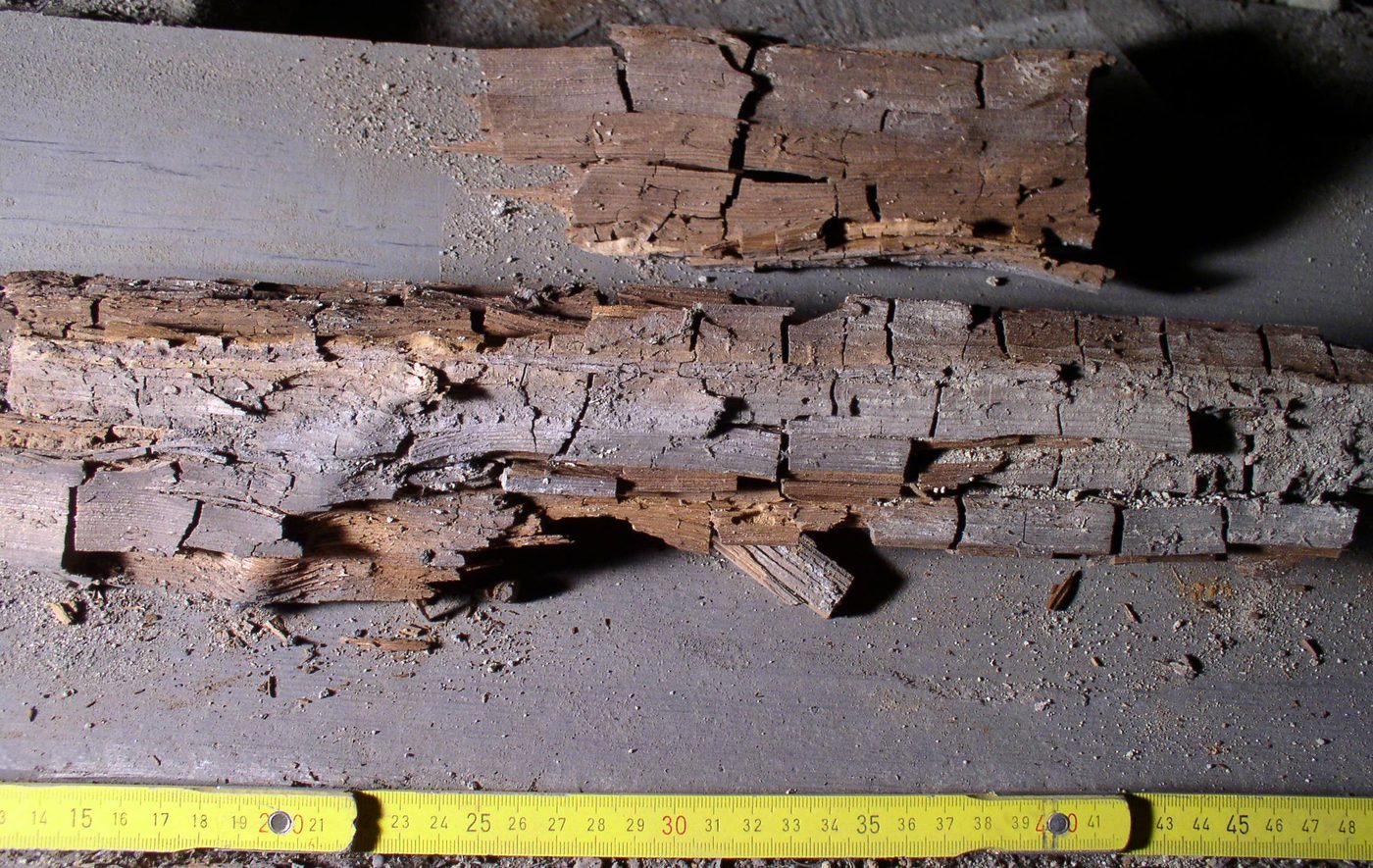
- Cracked or brittle timber with cuboidal shapes
- White or grey mycelium growth on timber or masonry
- Hyphae strands, particularly in hidden spaces such as under floorboards
- Fruiting bodies that look like large mushrooms, usually orange with a red centre
- Shrunken or sunken wood surfaces
- Paint peeling or bubbling due to moisture underneath
5. Where dry rot commonly occurs
Dry rot thrives in dark, poorly ventilated, damp environments — under floorboards, behind skirting boards, in roof timbers, basements and crawl spaces, around leaking windows or roofs, and anywhere with poor ventilation.
6. Dry rot vs. wet rot
| Feature | Dry rot | Wet rot |
|---|---|---|
| Moisture level | 20–30% | 50%+ |
| Spread | Can spread through masonry, away from the source | Stays close to the moisture source |
| Appearance | Fruiting bodies and mycelium | Local discolouration and softness |
| Odour | Musty, mushroom-like | Damp and stale |
Dry rot is far more aggressive and dangerous because it spreads beyond its moisture source.
7. Causes of dry rot
- Moisture infiltration from leaks, rising damp or condensation
- Poor ventilation in crawl spaces, basements or attics
- Lack of maintenance on plumbing or roofing
- Blocked gutters or drainage issues
- Timber in contact with wet masonry
Even newer buildings aren’t immune. Modern construction techniques that trap moisture can create the perfect environment for dry rot.
8. How dry rot spreads
One of the most dangerous aspects of dry rot is its ability to spread through non-wood materials: the fungus emits enzymes to break down timber, hyphae strands penetrate porous materials, mycelium spreads across walls, mortar and concrete, and spores from fruiting bodies carry the fungus to new areas. Even if the visible timber is removed, dry rot can return if it isn’t completely treated.
9. Professional diagnosis: when to call the experts
Visual signs are helpful, but professional assessment is crucial. Trained rot surveyors use moisture meters, borescopes and, where needed, invasive techniques to confirm the type of fungus, map the spread, identify hidden structural damage and recommend the right treatment. DIY methods often miss key indicators, or treat only the symptoms rather than the cause.
10. Treating and removing dry rot
- Identify and fix the moisture issue (leaks, ventilation, drainage).
- Remove affected materials (timber, plaster, etc.).
- Apply fungicidal treatment to surrounding areas.
- Replace with pre-treated or resistant timber.
- Ensure proper ventilation moving forward.
Some companies offer guarantees on their work, which is highly recommended given dry rot’s ability to return.
11. Can dry rot come back?
Unfortunately, yes — if damp conditions recur or spores go untreated. That’s why it’s vital to work with a reputable company that offers long-term warranties, use treated wood, improve ventilation permanently, and carry out regular inspections in vulnerable areas.
12. Prevention tips
- Fix leaks immediately (roofs, pipes, windows)
- Use dehumidifiers in damp-prone areas
- Install vents or extractor fans in bathrooms and kitchens
- Keep timber out of direct contact with masonry
- Apply paint or sealant to timber that might meet moisture
- Regularly inspect hidden or unused spaces
Conclusion
Dry rot poses a significant risk to the structural integrity of your property, but you can manage it effectively. By understanding the early signs, knowing the conditions that encourage its growth, and being proactive about treatment and prevention, you can keep your home safe and sound. If you suspect dry rot, don’t delay — the sooner you act, the better the outcome. If you suspect dry rot in your property, our specialist timber care and treatment team can identify it and put it right.