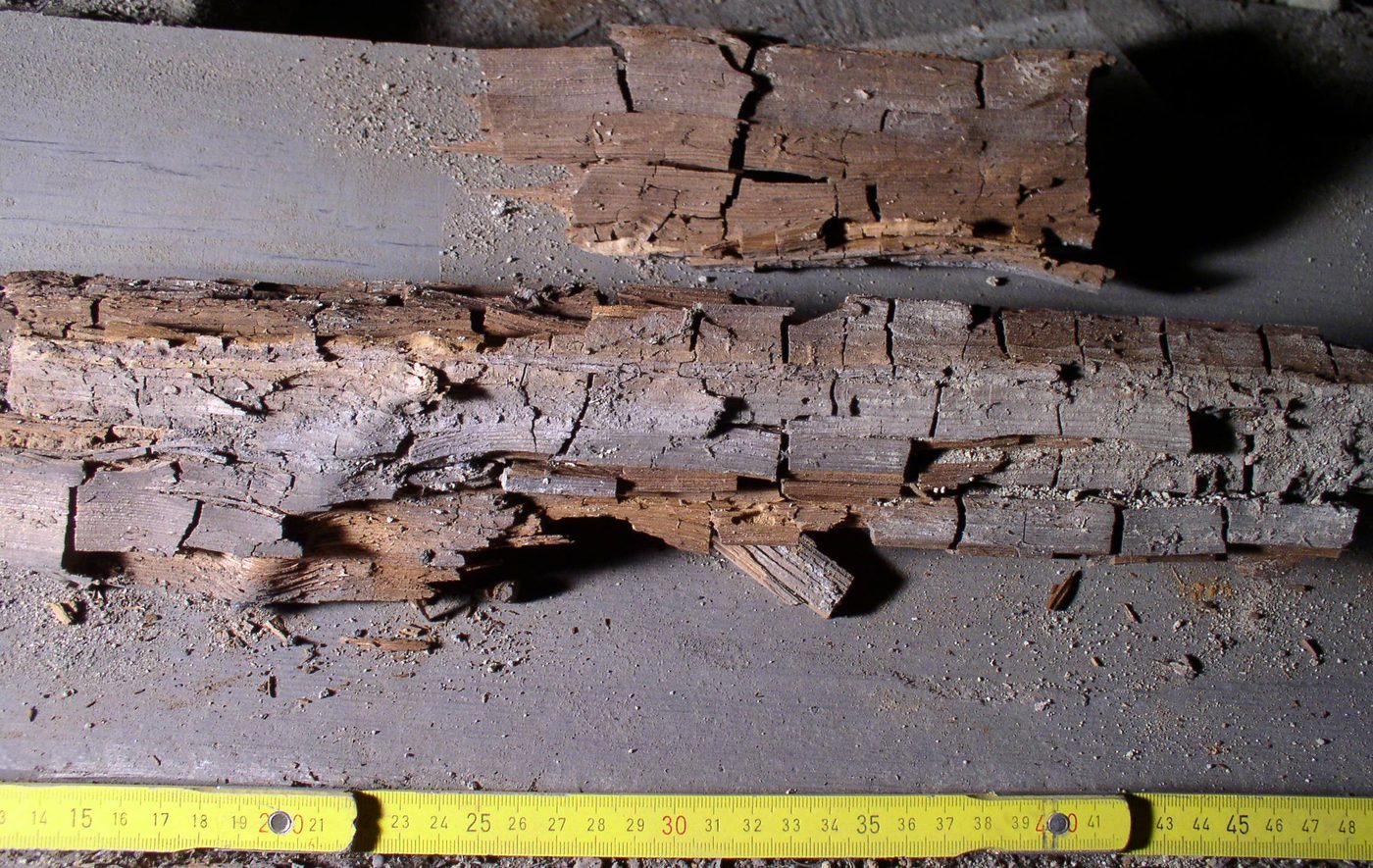
We know woodworm, and we know the beetles behind it. Plenty of wood-boring insects go after timber in UK properties, and telling them apart matters. We work out exactly which pest is at work in your home or commercial building, then apply the right specialist treatment to see them off. Our technicians are PCA-qualified.
Spotting woodworm and common wood-boring insects
The Deathwatch Beetle
The Deathwatch Beetle is one of the most common wood-boring insects in the UK, and it is the grown-up form of woodworm. Most of these insects get lumped under "woodworm", because where there are adults there are larvae. This one bores into timber to lay its eggs and settles into the frame of a house, chipping away at the structure as it goes.
Adult deathwatch beetles, Xestobium rufovillosum, are usually around 7mm long, with larvae up to 11mm. To draw in a mate they make a faint tapping or ticking sound, and on a quiet summer night you can sometimes hear it in the rafters of old buildings.
The Furniture Beetle
The common furniture beetle, or common house borer (Anobium punctatum), is another wood-boring beetle. As a larva it tunnels through wood and feeds on it. Adults measure between 2.7 and 4.5mm.
The adults do not feed at all; they are there to breed. The female lays her eggs in cracks in the wood, or in old exit holes if there are any. About three weeks later they hatch into 1mm-long, creamy-white, C-shaped larvae, the woodworm themselves. For the next three to four years those larvae bore through the timber, following the starchy grain and growing to around 7mm.
The Brown Powderpost Beetle
The Lyctus brunneus, or Brown Powderpost beetle, lives in hardwoods and softwoods the world over. Like the others, the adults breed and lay eggs that hatch into woodworm. They leave pinhole-sized "shot holes" in the wood where they lay their young. The life cycle runs much the same as the rest, and they too bore into building timber and weaken the structure.
Need more information?
Head over to our damp proofing and timber care page and get in touch. Our PCA-qualified technicians will pin down the problem and apply the right treatment. If you think you have rot rather than woodworm, our guide on how to identify dry rot explains what to look for.