If you live in a period property, or even a post-war terrace with a bit of a damp habit, the phrase “dry rot” likely sits somewhere near “subsidence” on your list of house-related nightmares. It feels like it belongs in a Victorian novel, but it’s still very much a reality for many UK homes today.
The real issue with Serpula lacrymans — the fungus responsible for the damage — is that it’s incredibly stealthy. By the time you see a giant, rusty-coloured mushroom growing out of your skirting board, the party has been going on behind the scenes for quite a while. Identifying the early signs of dry rot is the difference between a minor remedial job and having to replace your entire ground floor.
The unmistakable (but subtle) scent
One of the first things people notice isn’t actually a visual cue; it’s the smell. If you walk into a room — especially a cellar, pantry or a room that isn’t used often — and get hit with a heavy, persistent “mushroomy” odour, don’t ignore it. It’s a damp, earthy, almost sweet scent that doesn’t clear with a bit of ventilation. It’s the smell of a fungus actively consuming the cellulose in your timber.
Wood that looks like it’s been burnt
Dry rot is a bit of a misnomer, because the fungus actually needs moisture to start growing. Once it gets going, though, it sucks the life out of the wood, leaving it bone dry and brittle.
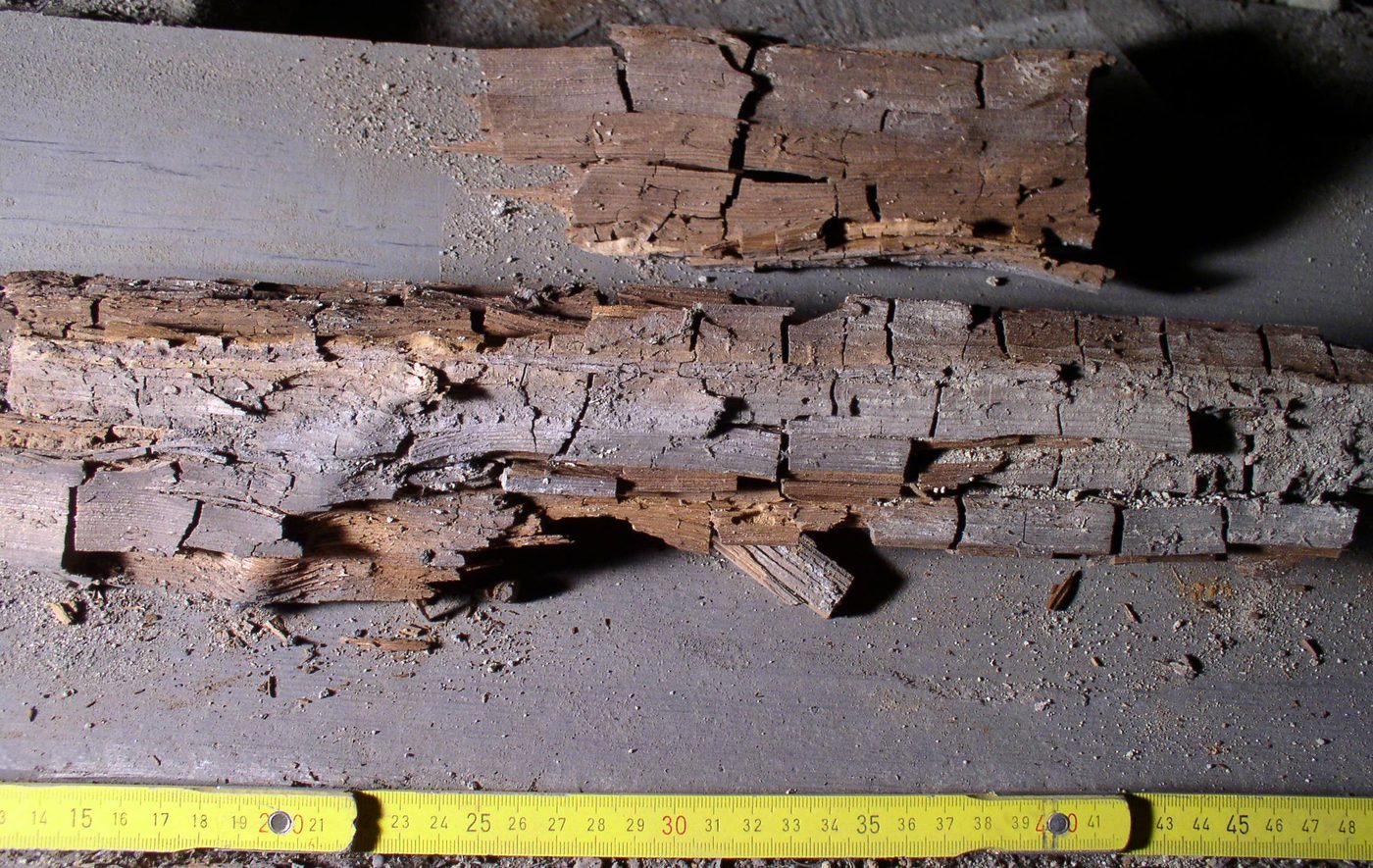
Keep an eye out for timber that looks “cuboidal” — where the wood cracks into distinct small square blocks, almost as if it’s been charred. If you press a screwdriver into a suspect joist or floorboard and it sinks in like polystyrene, that’s a massive red flag. Healthy wood should resist; rot-damaged wood simply crumbles.
The “orange dust” giveaway
Homeowners often find what looks like fine, reddish-brown brick dust settled on floors or along the edges of a room. If you haven’t been doing any DIY involving bricks recently, there’s a good chance this is a collection of dry rot spores.
The fungus produces these spores in the millions and they settle everywhere. It’s a sign the rot has reached a stage where it’s looking to reproduce and spread. The dust itself isn’t the rot, but it’s a direct indicator that a fruiting body — the “mushroom” part — is nearby, even if it’s tucked away under floorboards or behind a lath-and-plaster wall.
White, cotton-wool growth
If you can access your sub-floor, or peer behind a kitchen unit that’s had a leak, look for white or greyish “mycelium”. At a glance it looks exactly like cotton wool or thick cobwebs, and in very humid conditions it can even take on a yellowish tint.
Unlike many other types of mould, dry rot mycelium is incredibly aggressive. It can travel through masonry and behind plaster to find new wood to eat. If you see these silky threads spreading across a brick wall, you need to act quickly.
Why does it happen in the first place?
In the UK, our biggest enemy is often blocked air bricks or leaking gutters. Dry rot thrives in stagnant, damp air where the timber moisture content is around 20%. If your sub-floor ventilation is blocked by a new patio or years of garden debris, you’re essentially creating an incubator for rot.
Most people make the mistake of treating the rot but ignoring the moisture source. You can replace all the timber you like, but if that leaking pipe or rising damp isn’t fixed, the fungus will be back before the new paint is dry.
Practical next steps
If you’ve spotted any of these signs, don’t panic — but don’t wait. Poke around with a torch, check your external walls for damp patches, and make sure your gutters aren’t overflowing onto the brickwork. Dealing with dry rot early is rarely cheap, but dealing with it late is always more expensive. For the full picture, read our complete guide on how to identify dry rot, covering the signs, causes, treatment and how it differs from wet rot.